
Subscribe and receive email notifications of new blog posts.
 RSS Feed
30
Spring Turkey Prep: Getting Your Property Ready
Spring is Here - A Serious Hunter's Guide to Chasing Midwestern Gobblers
There's a moment in early April, somewhere between the last hard freeze and the first green tinge on the hillsides, when a gobble rips through the timber at first light and something primal fires in your chest. It doesn't matter how many springs you've done this. That sound does something to a person that's hard to explain to anyone who hasn't heard it while crouched against a white oak in the dark, shotgun across their knees, palms sweating in forty-degree air.
Eastern wild turkeys are one of the great hunting animals in North America. Not because they're the biggest or the most dangerous, but because they will humble you in ways that deer and ducks simply cannot. A mature gobbler has survived multiple hunting seasons by being suspicious of everything. He's spent his whole life eating and avoiding being eaten, and he's very good at both. If you want to consistently kill birds, you have to earn it — and that earning starts long before opening morning.
This is how you do it right.
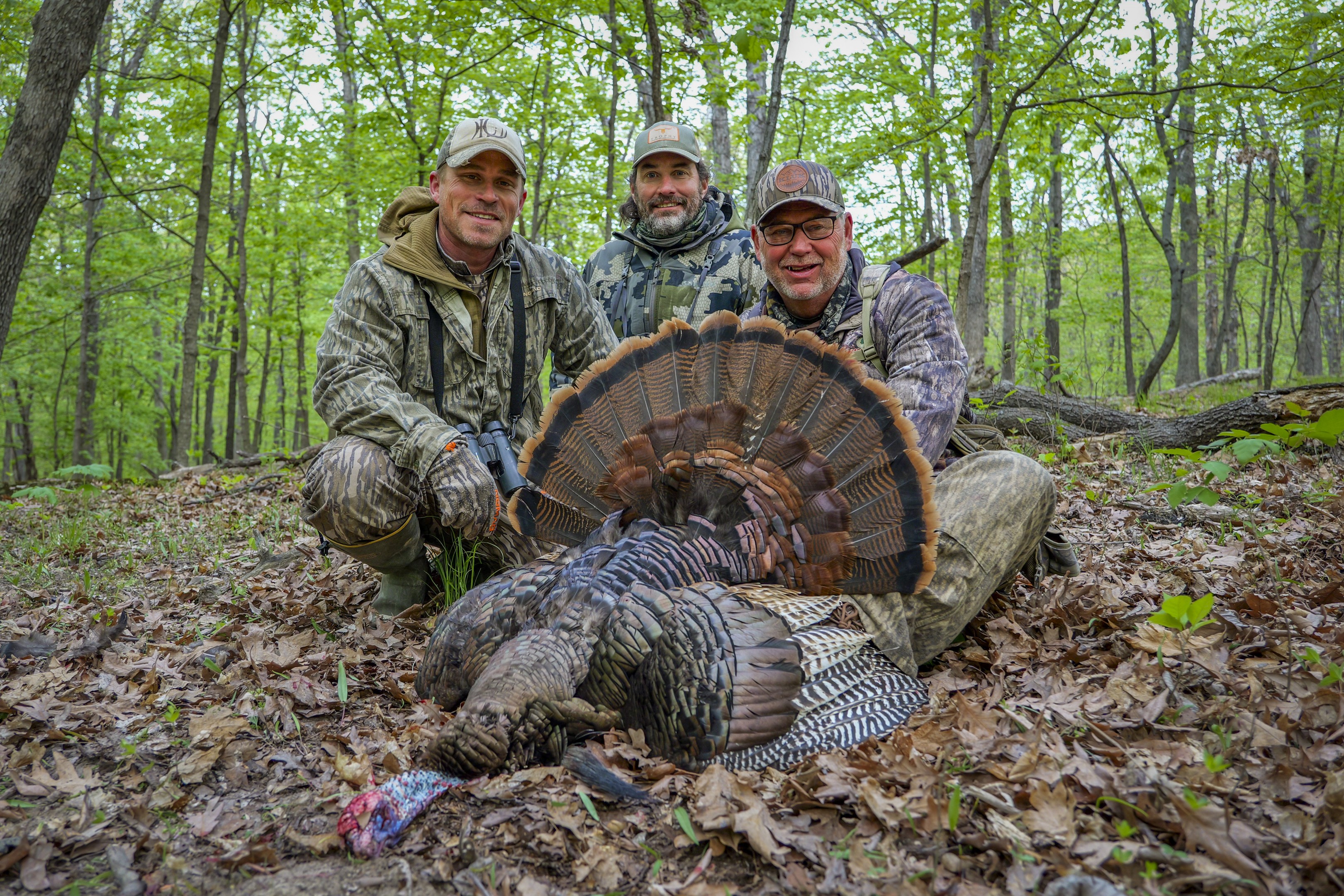
Know the Animal First
Before you touch a turkey call or hang a trail camera, spend some time understanding what a wild turkey actually is and how it lives.
Turkeys are highly social, highly vocal birds that organize their lives around predictable seasonal routines. In the Midwest — Missouri, Iowa, Illinois, Kansas, Indiana — the spring breeding season typically runs from late March through May, timed to coincide with longer days and warming temperatures triggering hormonal changes in both hens and toms.
Here's the core biological fact that governs spring turkey hunting: gobblers don't come to hens. Hens come to gobblers. That's the natural order. When you're out there yelping on a slate call, you're asking a bird to do something that runs counter to his instincts — you're asking him to reverse the script. Understanding this tells you everything about why turkey hunting is hard, and it tells you exactly where the opportunities lie.
A dominant gobbler in the Midwest will typically have a harem of two to six hens during peak breeding. When those hens are with him, he is nearly impossible to call away. He has what he wants. But early in the season before hens are fully receptive, late in the season after hens are on nests, or on mornings when a henned-up bird loses his company — that's when a well-placed call can bring a longbeard at a dead run. Your job is to be in the right place when those windows open.
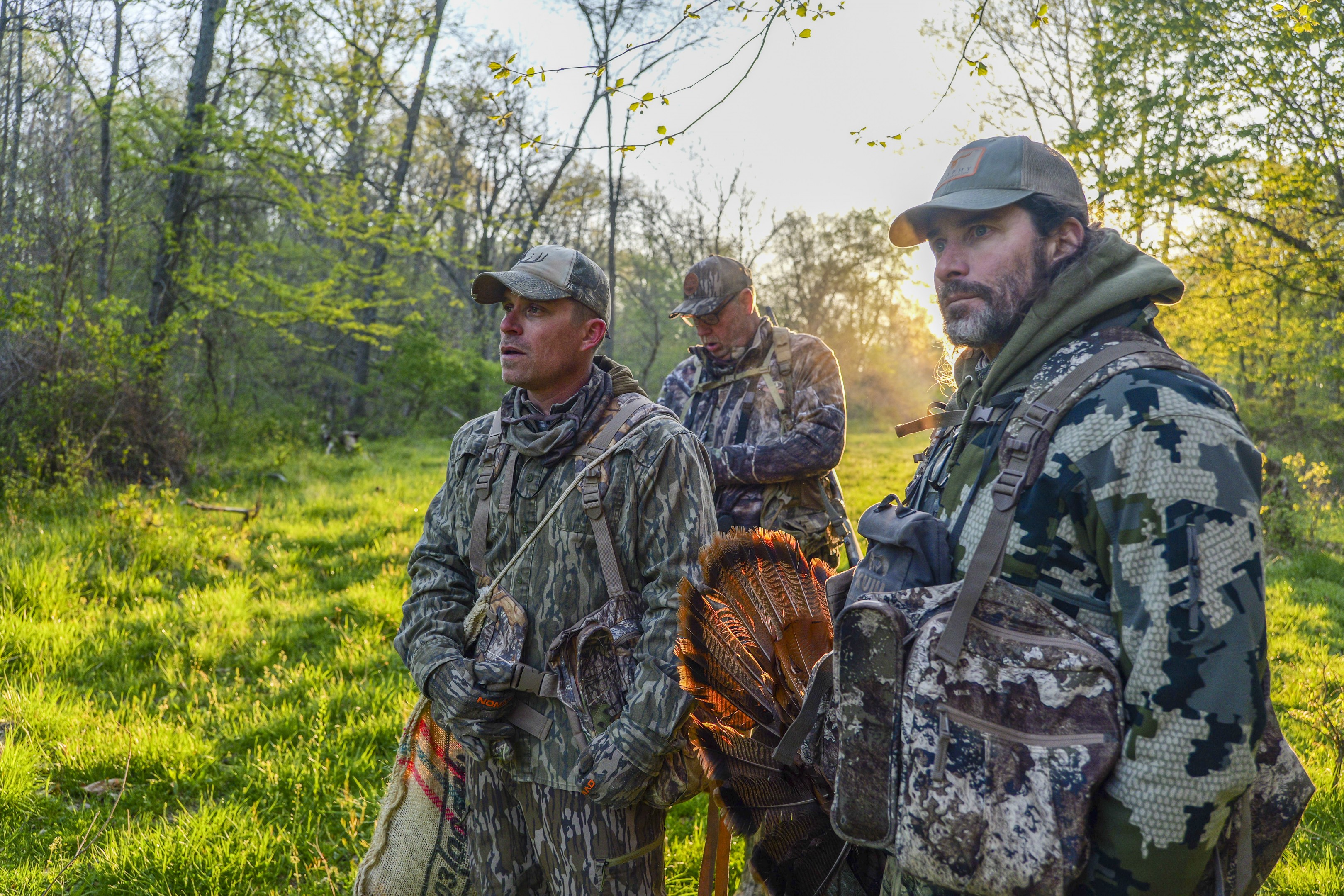
Scouting: Do It Like You Mean It
Most hunters scout too late and too casually. If you want to kill turkeys on your property with any consistency, you need to be in the woods in February and early March, before birds feel any hunting pressure, gathering intelligence that will pay dividends all season.
Find the roosts first. Wild turkeys in the Midwest are creatures of extraordinary habit when it comes to where they sleep. They roost in the same timber, often in the same trees, night after night throughout the season. Your job is to find those trees before the season opens.
What you're looking for: large, mature hardwoods with horizontal limbs at canopy height. Oaks, sycamores, and cottonwoods along creek drainages are prime candidates across most of the Midwest. Birds want to be high enough to feel safe from ground predators, and they want visibility — they don't roost in the middle of thick, brushy timber. They want to see danger coming.
The best way to find roosts is simple and it doesn't cost anything: be in the field at dusk in late March and listen. Turkeys are loud going to roost — they fly up one by one, thrashing branches, occasionally yelping and clucking. Mark every roost site on your mapping app. Then come back the next morning before first light, sit downwind a few hundred yards away, and listen to them gobble on the limb as the sky gets light. What you learn in those two hours will be worth more than any piece of equipment you own.
Understand the fly-down and the morning routine. When turkeys fly down from the roost, they almost always move in a predictable direction toward food or toward hens. Watch this without bumping them. Over several mornings, you'll identify the specific routes they take, the fields or timber openings they move toward, and critically — where the strut zones are.
Read the sign. Turkeys advertise their presence if you know what you're looking at:
- Tracks in creek mud or soft field edges tell you where birds are crossing and in what numbers. Tom tracks are notably larger — front toe to back heel, a mature gobbler's track can measure four inches or more.
- Droppings are sex-specific: tom droppings are J-shaped and considerably larger than hen droppings, which are more spiral or circular. Find tom droppings in a consistent location and you've found a travel corridor worth hunting.
- Scratch — areas where birds have raked leaves aside while feeding — tells you about food sources. In early spring in the Midwest, birds are often targeting waste grain in agricultural fields, green clover in open areas, and invertebrates and mast remnants in the timber.
- Feathers and drag marks from wing tips in soft soil near open areas indicate strut zones. A gobbler dragging his wingtips while in full strut will sometimes leave faint lines in the dirt or leave primary feathers behind.
Map all of this. Build a picture of how birds are using every corner of your property.
Identify and Protect Strut Zones
A strut zone is exactly what it sounds like — an area where a gobbler likes to display. These are typically open areas with good sightlines where a bird can be seen by hens at a distance. In the Midwest, the classic strut zones are:
- Field edges and pasture corners, particularly where two habitats meet
- Ridge tops in timbered terrain, where a bird commands a view of multiple drainages
- Logging roads and two-tracks running through timber
- Open hardwood stands where the canopy is high and the understory is relatively sparse
- Food plot edges, especially where clover or small grains meet timber
Once you identify these areas, treat them with the same reverence you'd give a whitetail scrape. Don't walk through them unnecessarily. Don't let your scent or disturbance condition birds to avoid them. The strut zone is where you want to be on opening morning, and you want a bird to feel comfortable there right up until the moment he isn't.
Prepare Your Property
Most landowners can make meaningful improvements to their turkey habitat with a chainsaw, a brush hog, and some basic food plot seed. None of this requires a large budget, but it does require some thought.
Create and maintain open areas. Turkeys, despite being woodland birds, spend enormous amounts of time in open areas. A field, a pasture corner, a brushed-out ridge top — these attract birds and give them places to strut, feed, and congregate. If you have timber that's been shaded out at the understory level with no ground layer, consider selective logging or prescribed burning to open it up. The best turkey timber in the Midwest has a mix of mature canopy and open, parklike ground cover.
Plant clover. If you do one food plot for turkeys, make it a clover plot. Ladino white clover in particular is a nearly year-round food source that turkeys return to obsessively in spring. Even a half-acre plot mowed into a field edge can become a strut zone that pulls birds from a quarter mile away. Clover also attracts the insects that turkeys — especially hens with poults — rely on heavily for protein.
Clear quiet access routes. This is one of the most overlooked aspects of property preparation. The best setup in the world does you no good if you have to snap branches and wade through brush to reach it. Walk your access routes before the season and trim what needs trimming, lay down a path over any crunchy areas, and identify where you can slip in under darkness without making noise. A bird that hears you coming at 5:30 AM is a bird that won't be there at 6:00.
Trim shooting lanes, not strut zones. You want visibility from your calling location, but resist the urge to over-manicure the areas where birds actually travel. Leave the strut zones natural. Trim shooting lanes in the areas where you will be sitting, not where the bird will be walking.
Protect your roost timber. If you know where birds are roosting, keep people, dogs, and ATVs away from those areas during the season. A spooked roost can cause birds to move off your property entirely. If you're going in to hang a camera near a roost, do it once in February and stay out. The intel isn't worth repeated disturbance.
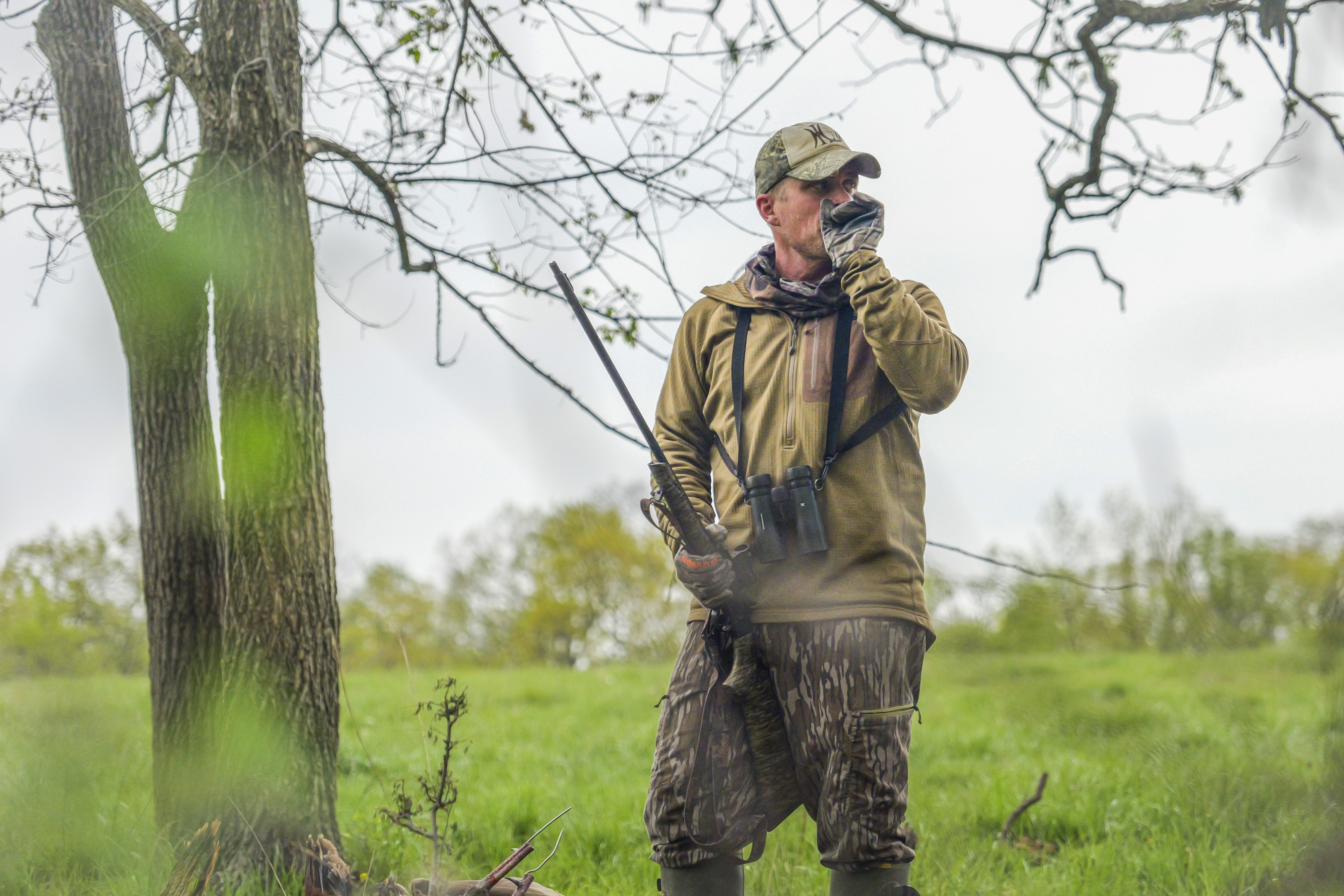
Calling: Enough to Kill a Bird, Not to Win a Contest
There's an entire industry built around turkey calling, and a fair amount of it is aimed at getting you to buy things rather than kill turkeys. Here's the honest version.
You need to be able to make a convincing yelp, a soft cluck, and a purr. That's it. Those three sounds, made with moderate competence on a slate or box call, will kill you a turkey. The aggressive cutting, the cackles, the fighting purrs — those have their place, but they're finesse moves that only matter after you've mastered the basics.
The yelp is the primary turkey vocabulary. Hens yelp to communicate location and mood. A series of five to nine yelps on a slate call, done at moderate volume with realistic cadence, is the most productive call you'll ever make.
The cluck is short, single notes — conversational. When a bird is close and locked in, clucks and soft purrs will often close the last fifty yards when a loud yelp would blow him out.
The fighting purr is aggressive, rattling purring that simulates two hens fighting. It works best early in the season when hens are competitive over dominance, and it can pull a bird away from hens by bringing the hens to you, dragging the gobbler along.
The most important calling advice anyone can give you: call less than you think you should. Especially in the Midwest, where birds carry less hunting pressure in some areas and can be very responsive, the instinct to hammer a gobbling bird with call after call will work against you. Make a series of yelps, put the call down, and wait. If he's gobbling back but not moving, the worst thing you can do is keep calling. Let him wonder where you went.
If you are looking for tips to improve your turkey calling skills - we made a video with our friend and world-champion turkey caller, Billy Yargus. Check out this turkey calling masterclass here:
How to Call Turkeys - Calling Masterclass with 3X NWTF Champion Billy Yargus!
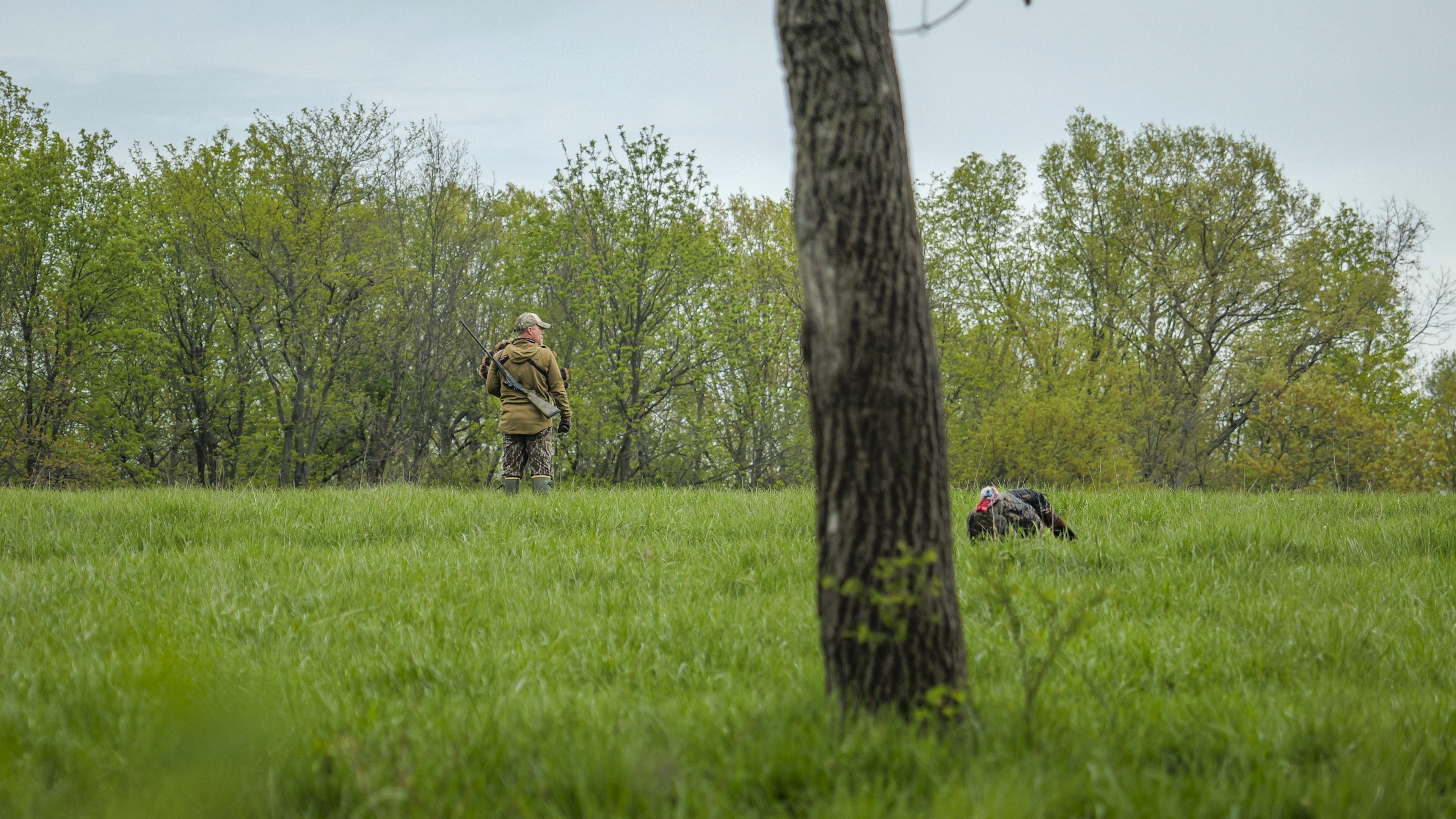
Setting Up to Win
The setup is everything. A mediocre caller in a perfect setup will kill more birds than a world-class caller in a bad spot.
The ideal turkey setup has three characteristics:
- It's where the bird already wants to go. You are not trying to redirect a gobbler's morning routine — you're inserting yourself into it. If a bird flies down from a roost and walks northeast to a strut zone every morning, set up between the roost and the strut zone, slightly off his direct line of travel. Trying to call a bird across a creek, over a ridge, or through thick brush is a losing proposition. Work with his habits, not against them.
- It gives you concealment and visibility. Sit against a tree wider than your shoulders — this breaks up your outline and protects your back. You want to see the bird before he sees you, which means being in a position where you can scan open ground. Don't bury yourself in brush so thick you can't see fifteen yards.
- It's accessible without spooking birds. Plan your approach the night before. Know where you're parking, what route you're walking, and how long it takes in the dark. Be in your setup at least thirty minutes before legal shooting light, settled, still, and quiet. The birds that die on opening morning die because their hunters were already sitting when the woods woke up.
The Morning of the Hunt
Get there early. This cannot be overstated. Set up in the dark, get still, and let the woods come to you.
When you hear a bird gobble on the limb, resist the urge to immediately call. Let him gobble two or three times. Gauge how far he is and what direction he's facing. When he gobbles on his own, unprompted, he's fired up. That's when a single soft tree yelp — the sound of a sleepy hen waking up — will often trigger an immediate response.
When he flies down, watch his body language if you can see him. A bird that flies down, hits the ground, gobbles once, and puts his head down to feed is a tough bird. A bird that flies down, fans out, and gobbles repeatedly while turning in circles is an easy bird. Read him and adjust your calling volume and frequency accordingly.
The most common mistake after a bird goes silent is assuming he's gone. In the Midwest, toms will often go quiet and simply walk in without announcing themselves. Stay absolutely still once you've called and the bird has stopped gobbling. Your movement will end the hunt before it ends.
A mature Midwest gobbler is an animal that has managed to survive in a landscape increasingly stacked against wildlife. He deserves a clean kill and a meal that honors what he was. Clean your bird in the field, get it cooled down quickly, and put that meat to use.
Turkey hunting in the Midwest is genuinely one of the finest hunting experiences this continent offers. The bird is smart. The mornings are extraordinary. The interaction between hunter and animal — the calling, the response, the cat-and-mouse of it — is unlike anything else. Put in the work this spring, know your land, know the bird, and go earn it.
Trophy Properties and Auction works with landowners and buyers across the Midwest who take their land — and what lives on it — seriously. Whether you're managing for turkeys, whitetails, or the long-term value of exceptional ground, we're here to help you understand what you have and what it's worth.